


Sparkling white quartz is now a popular material for the interior design industry, and it appeals to homeowners and designers alike because it offers the best of both worlds in terms of beauty and performance. The natural stone is extremely versatile, which means that it has a timeless grace that can make any space from the kitchen to the bathroom, and beyond look better. This guide will take you deeper into the beautiful world of sparkling white quartz, discussing its features, benefits, and the myriad possibilities of its use in your perfect home.
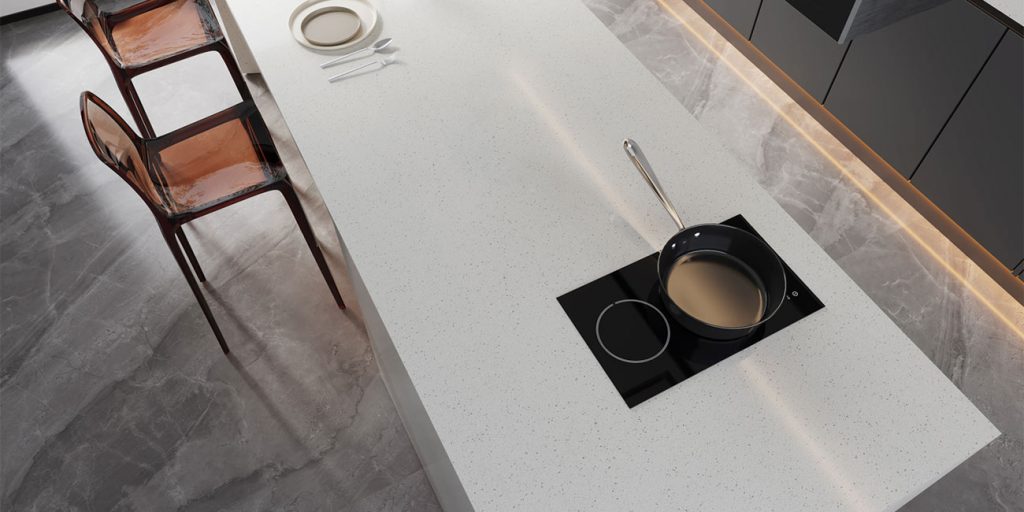
Sparkling white quartz is natural, but has been carefully designed to give you a stunning, high-performance surface. It is made up of quartz crystals mixed with resin, and it provides a unique, shimmery look that is unmatched by most countertop materials. Stunning in its shimmer and its pure white beauty, sparkling white quartz has become a favorite for homeowners and designers who are looking for something elegant but not cheap to add to their interior design.

Sparkling white quartz is a popular choice because of its incredible strength and low maintenance. It’s an engineered stone that resists scratches, stains and heat perfectly, so it’s perfect for kitchens and bathrooms. Being porous also ensures that it is highly bacteria resistant and easy to clean which results in a safe and durable surface.
The beauty of sparkling white quartz lies in its eye-catching appearance. Its combination of quartz crystals and resin gives it a mysterious, reflective look that lends a touch of elegance and refinement to any setting. The white colour of the stone provides a sleek, classic feel that can be incorporated into a multitude of styles, modern or traditional.
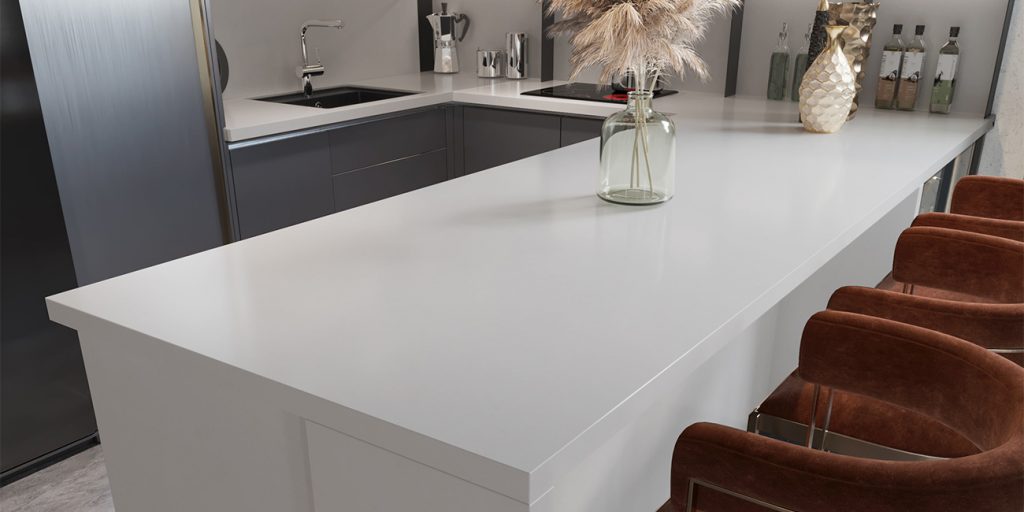
Shiny white quartz has many advantages in interior design. It’s extremely durable and low maintenance – it will last a lifetime, making it an excellent purchase for homeowners. Its porous finish and antibacterial, hygienic and easy-to-clean characteristics also make the material ideal for use in high traffic rooms such as kitchens and bathrooms.
Another advantage of sparkling white quartz is its versatility. The material fits well with many design themes, ranging from ultra-slim to traditional. The sleek, clean look offers a blank space for homeowners and designers to play around with colors, textures and design elements to achieve an overall seamless and beautiful space.

Sparkling white quartz is an extremely versatile product for use in a multitude of interior design spaces. The most common applications of this product are in the form of kitchen countertops, where its strength and wipe-clean appearance makes it a popular choice for hectic families and gourmet cooks. The material’s ethereal finish also makes it ideal for bathroom vanities, where it can add a touch of elegance and sophistication.
In addition to kitchens and bathrooms, brilliant white quartz can be applied anywhere in the home, including fireplaces, bar tops and even the outside. It’s incredibly resistant to the elements and has an almost unmarked look, which makes it a popular option for seamless, high-end looks across a broad range of environments.

Maintaining the beautiful, long-lasting beauty of sparkling white quartz surfaces is simple. The non-porous finish of the material ensures that it is exceptionally stain and spill resistant, which means it’s easily cleanable by a wipe-down with a mild, non-abrasive cleaner. For larger spills, you can scrub the surface with a soft bristled brush to get it back to its original shine.
It should be mentioned that sparkling white quartz is highly resilient, but it is still susceptible to harm from sharp objects and overheating. Cutting boards and hot pads should be used to cover the countertop when preparing meals, and hot pans or dishes should not be placed directly on the countertop. Providing proper cleaning and maintenance, radiant white quartz surfaces can last years without fading.
If you’re considering a countertop material, homeowners and designers can choose among several different types with their own benefits and features. Unlike other commonly used materials like granite, marble, laminate, and so on, sparkling white quartz is superior to others in terms of their high durability, low maintenance, and attractive look.
Granite, for instance, is a natural rock that has a high durability and resistance to scratches and heat. Yet it can be more porous than quartz, making it susceptible to stains and needing frequent sealing to keep its beauty. Rather, marble, as sought-after for its refined, timeless appearance, is both more porous and easily etched and stained.
Although cheaper, laminate countertops can lack the natural elegance and durability of pure white quartz. The material’s engineered structure and its special mix of quartz crystals and resin gives it a major advantage when it comes to durability, cleanliness and appearance.
If you’re asking what sparkling white quartz costs, consider the value and return it will add to your home in the long run. This product will cost a little more in the beginning than other countertop materials, but it will offer outstanding strength and low maintenance for long-term use.
Prices for sparkling white quartz can vary based on the size and scope of the installation, the shape and pattern of the stone, and the brand or manufacturer. Additionally, location and regional conditions can affect the cost as well.
You should always seek the advice of a reputable supplier or installer in order to get accurate pricing information and recommendations on which solution is best for your project and budget.
Crystallizing white quartz is widely available from several retailers and specialty stone dealers. If you are buying this material, it is a good idea to shop from trusted sources that can provide many different styles and designs, along with professional installation and care tips.
Home improvement stores and kitchen and bath showrooms also stock a variety of sparkly white quartz products, so homeowners and designers can view the material in person and play with various designs. Shopping online, as well as specialty stone retailers, also makes it easy to browse and purchase white quartz in brilliant white, often with the added service of professional installation.
No matter where you decide to get your pearly white quartz, you need a professional and reliable dealer to help you make sure you’re getting the highest quality product for the best price.
Lastly, sparkling white quartz is an awesome material that can be used to provide a harmonious mix of beauty, durability, and ease of use. Because of its eye-catching, bright look, as well as its superior anti-scratch, anti-stains and anti-heat performance, it is an excellent option for both homeowners and designers who want a modern and durable solution for their interior decor.


When it comes to choosing the perfect quartz countertop for your home or commercial space, understanding the various quartz slab sizes is essential. With the increasing popularity of quartz due to its durability, aesthetic versatility, and low maintenance, homeowners and designers alike need to be familiar with the options available, especially the distinction between jumbo and standard slabs. But what exactly are quartz slab sizes, and how do they influence your renovation project? In this comprehensive guide, we will explore everything you need to know about quartz slab sizes, helping you make informed decisions to achieve a seamless and stunning finish.

Quartz slabs are engineered countertop surfaces made from crushed natural quartz combined with resins, pigments, and additives. They offer an excellent alternative to natural stone like granite or marble because they are non-porous, highly durable, and available in a vast array of colors and patterns. Quartz is recovered into large slabs, which are then cut into the sizes required for various installation projects.
Understanding quartz slab sizes is crucial because it impacts your design choices, the amount of waste generated, and the necessity for custom fabrication. The key distinction lies in the dimensions: standard versus jumbo slabs. Let's dive into what these sizes are and how they are used in real life.

Standard quartz slabs are the most common size found in showrooms and available from major manufacturers. Typically, these slabs measure around 120 inches (10 feet) in length and 55-65 inches in width, with a thickness of 2 cm (3/4 inch) or 3 cm (1 1/4 inch). The weight of a standard slab can be approximately 1000-1500 pounds, depending on thickness and material density.
These standard sizes are ideal for most residential kitchens, bathrooms, and small to medium-sized commercial countertops. They are widely available and easier to handle during installation, making them a go-to choice for many projects.
Why choose standard slabs? Because they are accessible, less costly in terms of transportation and fabrication, and their size is usually sufficient for typical countertop dimensions. But what if your project demands larger or more seamless surfaces? Thatâs where jumbo slabs come into play.
Jumbo quartz slabs are significantly larger, typically measuring about 130-144 inches (around 11 to 12 feet) long and 65-75 inches wide. Some manufacturers may produce even larger sizes based on customer specifications, with thicknesses similar to standard slabs.
The primary advantage of jumbo slabs is the potential for fewer seams - an important aesthetic consideration in high-end kitchens or commercial spaces. Fewer joints mean less visible disruption in pattern continuity, better structural integrity, and a sleeker overall appearance.
Is a jumbo slab right for you? If your project calls for a large uninterrupted surface - like a sprawling kitchen island or a commercial bar, jumbo slabs are worth serious consideration despite the higher cost and handling complexity.
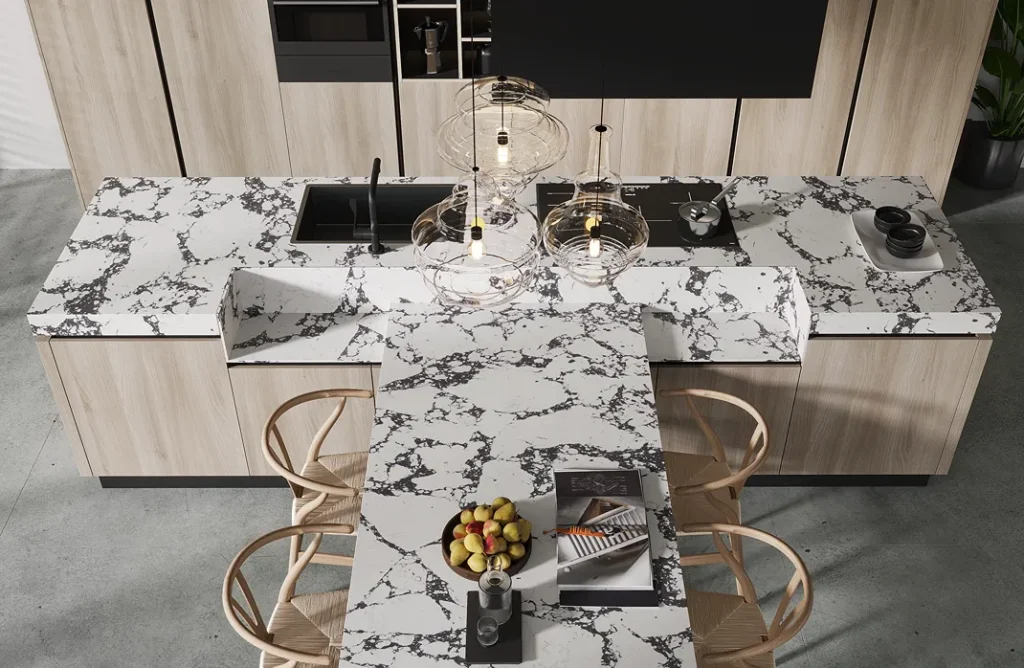
While the size difference might seem straightforward, understanding how these sizes influence your project's design and logistics is essential. Here are some practical points to consider:
Remember, though, that larger slabs might be limited by your space's access routes, door sizes, or elevator dimensions, which is an important logistical factor to keep in mind.

Dealing with jumbo slabs presents unique challenges. They require specialized equipment, professional expertise, and careful planning. Here are some tips to ensure smooth handling and installation:
Adhering to these tips can save time, prevent costly damages, and produce a flawless final look.
Deciding between jumbo and standard quartz slabs ultimately hinges on your project's scope, budget, and design aspirations. Do you value a seamless, luxurious appearance over potential logistical complexities? Or do you prefer a more straightforward, cost-effective approach? Consider these questions, consult with your supplier, and work with your fabricator to identify the best solution.
Personal opinion: From my perspective, in high-end custom kitchens or commercial spaces, investing in jumbo slabs is often justified. The visual impact and reduced joints outweigh the additional costs and logistical considerations. However, for standard residential renovations, quality standard slabs usually suffice, offering excellent outcomes without the added complexity.
Understanding quartz slab sizes specifically the difference between jumbo and standard slabs is fundamental in designing and executing beautiful, functional countertops. Larger slabs offer seamless, high-end appeal but require careful handling and planning. Smaller, standard slabs are versatile, more accessible, and easier to manage for most projects.
Ask yourself: What is more important for your project - seamless aesthetics or ease of installation? With this guide, you are better equipped to make an informed decision that aligns with your vision and practical considerations. Remember, collaborating with experienced professionals ensures you harness the full potential of quartz's natural beauty and durability.
Happy designing, and may your next project be as seamless and stunning as the slabs you choose!

When it comes to designing or renovating your kitchen or bathroom, one of the most crucial decisions you'll face involves selecting the right countertop material. Two popular options are quartz and marble. Both exude elegance, yet they differ significantly in terms of durability, maintenance, cost, and aesthetic appeal. So, how do you decide which material suits your lifestyle and design goals? Let's delve into the nuanced comparison of quartz vs marble to help you make an informed choice.

The debate between quartz vs marble often boils down to aesthetics versus practicality. Marble, a natural stone, is celebrated for its luxurious appearance and unique veining. Quartz, engineered from crushed natural quartz and resin, offers versatility in color and pattern, along with superior durability. Your choice depends largely on your priorities—whether you value timeless elegance or high-performance surfaces.
Marble, while breathtaking, is relatively soft compared to quartz. It’s prone to scratching, staining, and etching from acidic substances like lemon juice or vinegar. On the other hand, quartz is engineered to withstand normal kitchen and bathroom wear and tear. Its non-porous surface resists stains and scratches, making it a resilient option for busy households.
For instance, in a real-world scenario, a family in Austin, Texas, opted for quartz countertops in their kitchen because of their high resistance to daily kitchen activities. According to a report by HGTV, quartz surfaces are about three times harder than marble, proving their superior durability in everyday use.
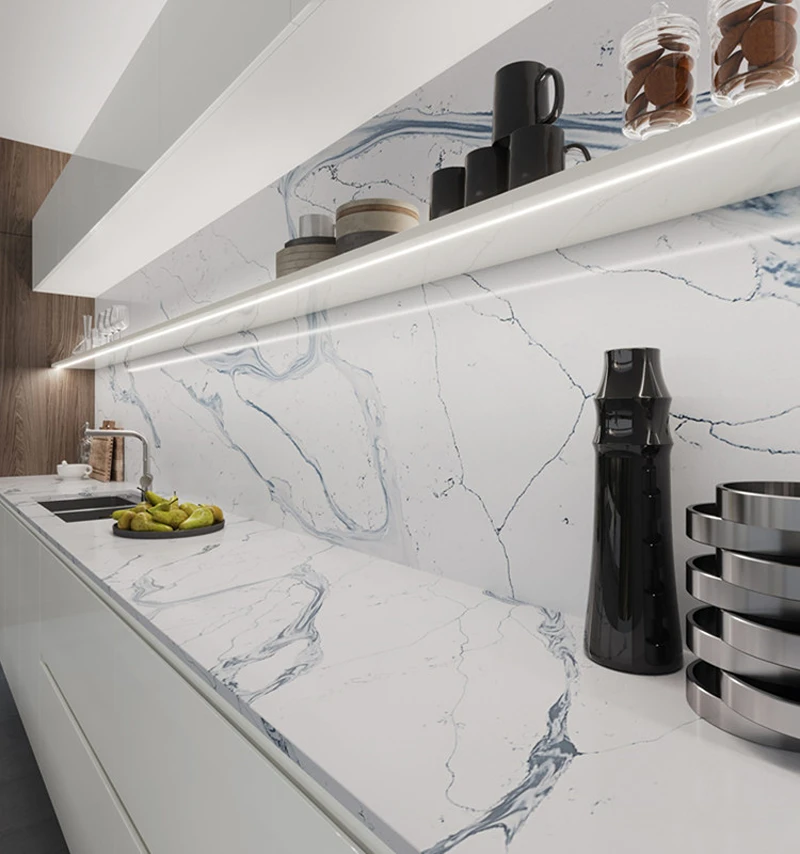
When it comes to maintenance, quartz shines—literally. Its non-porous surface means it does not require sealing, and cleaning simply involves regular wiping with soap and water. Marble, however, demands more care; it requires periodic sealing to prevent staining and etching. If you prefer a low-maintenance surface that stays beautiful with minimal effort, quartz may be the better choice.
Cost is a significant deciding factor. On average, quartz countertops are priced between $50 to $100 per square foot, including installation. Marble tends to be more expensive, often ranging from $75 to $200 per square foot, depending on the rarity and quality. When budgeting, remember that maintenance costs—like sealing marble annually—should also be factored into the total expense.

Both quartz and marble offer distinct visual appeal. Marble epitomizes classic luxury with its intricate veining and range of natural colors from white to deep green. Each slab is unique, making it a statement piece in any room. Quartz, however, provides consistency in look and offers an array of colors, patterns, and finishes that mimic other stones or even abstract designs.
To illustrate, a high-end hotel in New York utilized marble in its lobby and bathrooms to evoke timeless elegance, sourcing slabs with veining that complements the space's architecture (Verifiable source: Architectural Digest, 2022). Conversely, a modern condo in San Francisco chose quartz for its kitchen countertops, blending seamlessly with its contemporary décor while maintaining effortless style.
Environmental considerations are increasingly important for homeowners. Marble is a natural stone, but quarrying can have significant ecological impacts. Quartz is engineered, often involving artificial resins and energy-intensive manufacturing. However, many suppliers now produce eco-friendly quartz using sustainable practices and recycled content. Ultimately, the environmental footprint depends on sourcing and manufacturing processes.
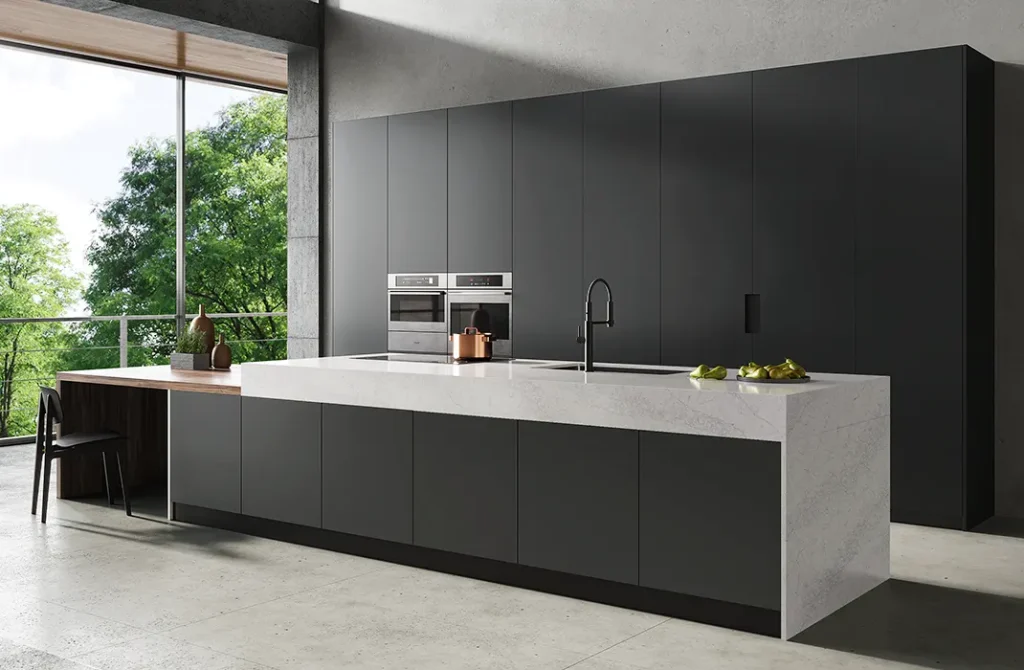
In a renovation project documented by *Houzz*, homeowners selected quartz countertops for their kitchen due to its durability and easy maintenance. They chose a white quartz with marble-like veining to evoke luxury without the upkeep associated with natural marble. This decision resulted in a stylish, functional space that has remained pristine for over three years, showcasing quartz’s practicality in active households.
In a historic Boston home, designers opted for marble to preserve the vintage charm of the space. The natural veining and elegance of marble complemented the period architecture. Despite the higher maintenance, the homeowners valued the authentic, luxurious look. The project highlighted how marble can be a timeless choice, especially when properly cared for. (Source: Boston Architectural College, 2021)

As an interior designer, I’ve seen firsthand how both materials can transform a space. My personal preference leans toward quartz for most kitchens due to its robustness and fuss-free maintenance. However, in bathrooms or spaces where historic charm is paramount, marble still holds a special place. Isn’t it exciting that we have such beautiful options tailored to different needs?
So, considering quartz vs marble, what matters most to you? Are you after a surface that provides unmatched elegance and authenticity, or do you prioritize resilience and low-maintenance solutions? The answer will guide your choice, ensuring your space is both beautiful and functional.
Ultimately, both quartz and marble have unique advantages and potential drawbacks. The decision depends on your lifestyle, aesthetic preferences, budget, and environmental values. Carefully weighing these factors will lead you to the perfect surface for your kitchen or bathroom. Remember, investing in quality materials not only enhances your home’s beauty but also bolsters its longevity and your peace of mind.

The modern home exists at the intersection of beauty and practicality—especially for busy households where time for maintenance is limited, yet the desire for sophisticated aesthetics remains strong. Among the numerous surface options available today, Calacatta Gold quartz has emerged as a compelling solution that bridges this gap, offering the visual luxury of natural marble with significantly reduced maintenance demands. This engineered stone delivers the distinctive elegance of Italian Calacatta marble—characterized by dramatic gold veining against a luminous white background—while providing the practical benefits that make it ideal for active households.

For homeowners seeking to elevate their spaces without committing to high-maintenance materials, Calacatta Gold quartz represents a technological triumph in surface design. Understanding its unique properties, applications, and advantages can help you make informed decisions about incorporating this versatile material into your busy home. This comprehensive guide explores why this particular engineered stone has become a favorite among designers and homeowners who refuse to compromise on either beauty or functionality.

Calacatta Gold quartz is an engineered stone designed to replicate the visual characteristics of natural Calacatta marble—one of Italy's most prestigious natural stones. Unlike natural marble, which forms over millions of years through geological processes, quartz surfaces are manufactured through a controlled process that combines approximately 90-94% ground natural quartz with polymer resins and pigments. This engineered approach allows manufacturers to create consistent, predictable materials that mimic natural stone while addressing many of its inherent limitations.
The distinguishing features of Calacatta Gold quartz include:
• A luminous white background that creates a bright, reflective surface
• Dramatic veining in warm gold to amber tones that adds movement and character
• Controlled pattern consistency that allows for more predictable installations
• Non-porous composition that prevents staining and bacterial growth
• Engineered durability that exceeds natural marble's practical performance
According to the Natural Stone Institute's 2024 Surface Materials Market Report, engineered quartz installations in residential settings have increased by 37% over the past five years, with Calacatta-inspired designs accounting for approximately 22% of all quartz installations—a clear indication of the growing preference for this aesthetic in contemporary homes.
The creation of Calacatta Gold quartz involves sophisticated engineering that combines natural materials with technological innovation:
• Crushed natural quartz crystals provide the material's primary structure and hardness
• Polymer resins bind the quartz particles while providing flexibility and resistance to cracking
• Pigments and coloring agents create the distinctive white background
• Advanced printing and veining techniques achieve the characteristic gold veining patterns
• Vacuum compression removes air while forming the slabs under intense pressure
• Curing processes harden the material into its final, durable state
This carefully controlled manufacturing environment ensures consistency across batches—a significant advantage over natural stone, where variation can make matching difficult and unpredictable.

The primary appeal of Calacatta Gold quartz in busy homes stems from its remarkable balance of beauty and practicality. Several key characteristics make it particularly suitable for households where time for maintenance is limited but design standards remain high.
Unlike natural marble, which contains microscopic pores that can absorb liquids and harbor bacteria, Calacatta Gold quartz features a completely non-porous surface. This fundamental difference translates to several practical advantages:
• Stain resistance that handles everything from red wine to tomato sauce without permanent marking
• Hygienic properties that prevent bacterial growth—particularly important in kitchen environments
• No sealing requirements, eliminating the periodic maintenance natural stone demands
• Ease of cleaning with simple soap and water rather than specialized products
In my experience designing for families with young children, this stain resistance represents perhaps the most compelling advantage for busy households. Clients consistently report that the ability to quickly wipe away spills without worry about permanent damage provides significant peace of mind in active family settings.
The high quartz content (one of nature's hardest minerals) provides exceptional scratch resistance compared to natural marble:
• Cutting directly on the surface, while not recommended, rarely causes visible damage
• Daily wear from regular use maintains its appearance without developing the patina natural marble acquires
• Kitchen tools and common household items won't easily mark the surface
• Pet claws and children's activities present minimal risk of damage
This durability translates to surfaces that maintain their new appearance with minimal effort—a stark contrast to the vigilance required to maintain natural marble's pristine condition.
While no stone surface should be subjected to extreme temperature changes, Calacatta Gold quartz offers practical heat resistance for busy kitchens:
• Brief contact with hot cookware causes no damage (though trivets are still recommended)
• Resistance to heat marking or scorching under normal kitchen conditions
• Stability in varying ambient temperatures without expansion or contraction issues
Case studies show that this heat performance represents a significant advantage in multigenerational homes where cooking often happens simultaneously or with varying levels of attention to protective measures. The material's forgiveness accommodates different usage patterns without showing evidence of misuse.
Beyond practical considerations, Calacatta Gold quartz delivers an enduring aesthetic that transcends trendy design movements. Its visual characteristics connect to classical design traditions while functioning beautifully in contemporary contexts.
The appeal of Calacatta patterns traces back centuries in architectural history:
• Connections to Italian Renaissance architecture and sculpture
• Presence in historical European palaces and significant buildings
• Associations with luxury, refinement, and artistic sophistication
• Cultural significance as a material reserved for important spaces
The engineered version captures this heritage while democratizing access to a formerly exclusive aesthetic.
The predominantly white background of Calacatta Gold quartz serves important spatial functions:
• Reflects light to brighten spaces with limited natural illumination
• Creates perceived spaciousness in smaller rooms
• Provides a neutral foundation that accommodates changing decorative elements
• Maintains visual continuity that unifies diverse design elements
Have you noticed how some materials seem to shrink a space while others expand it? Calacatta Gold quartz belongs decidedly in the latter category, its reflective quality and predominant brightness creating an almost architectural lighting effect that enhances spatial perception.
The distinctive gold veining patterns introduce several design advantages:
• Create organic movement that softens modern interiors
• Introduce warm metallic tones that complement both cool and warm color palettes
• Provide natural color-matching opportunities for coordinating elements
• Offer enough visual interest to function as a focal design element
According to interior designer Kelly Wearstler in Architectural Digest's 2024 Kitchen Trends Report, "The warm veining in Calacatta Gold creates a natural color bridge between cool and warm elements in a space—allowing greater flexibility with metals, woods, and other finishes than most stone surfaces provide."
While kitchen countertops represent the most common application, Calacatta Gold quartz's versatility extends to numerous locations throughout busy homes.

Creative applications that leverage this material's advantages include:
• Bathroom vanities that withstand moisture and cosmetic products
• Shower walls that eliminate grout cleaning and maintenance
• Fireplace surrounds that create dramatic focal points
• Home office desktops that resist coffee rings and daily wear
• Mudroom surfaces that handle the demands of busy entry points
• Laundry room counters that resist detergent staining
In my experience designing whole-home renovations, clients who initially select Calacatta Gold quartz for their kitchen frequently expand its use to secondary spaces once they recognize its practical advantages—creating material continuity that enhances overall design cohesion.

In kitchen environments, specific applications where this material excels include:
• Perimeter countertops that handle daily food preparation
• Islands that serve multiple functions from homework space to dining area
• Backsplashes that eliminate grout maintenance behind cooking areas
• Integrated sink decks that prevent water damage issues
• Serving areas that transition from cooking to entertainment zones
These applications specifically address the multifunctional demands placed on contemporary kitchens, where surfaces must transition between utilitarian and social functions seamlessly.

Bathroom applications benefit from specific performance characteristics:
• Resistance to common bathroom chemicals including hydrogen peroxide and acetone
• Imperviousness to moisture that prevents mold or mildew development
• Compatibility with undermount sink installations for easy cleaning
• Resistance to water spotting and mineral deposit buildup
Have you considered how much maintenance time could be saved with surfaces that don't require special cleaners or frequent wiping to prevent water marks? For busy households, this time savings accumulates significantly over months and years of use.

While initial cost exceeds some alternative materials, Calacatta Gold quartz offers compelling value considerations that justify its premium position.
A complete assessment of value must consider several factors beyond purchase price:
• Elimination of periodic sealing costs required by natural stone
• Reduced likelihood of damage requiring repairs or replacement
• Lower cleaning product expenses due to simple maintenance requirements
• Extended aesthetic lifespan that delays renovation timelines
Case studies comparing 10-year ownership costs between natural Calacatta marble and engineered Calacatta Gold quartz typically show the engineered version costs 30-40% less when accounting for all maintenance, repair, and longevity factors—despite similar or slightly higher initial investment.
From a property value perspective, Calacatta Gold quartz offers several advantages:
• Recognition among prospective buyers as a premium material
• Perceived value that often exceeds actual cost
• Fresh appearance during resale without restoration requirements
• Design versatility that appeals to broad buyer demographics
The National Association of Realtors' 2024 Remodeling Impact Report indicates that kitchen renovations featuring engineered quartz surfaces recover approximately 72% of project costs at resale—among the highest recovery rates for any interior renovation feature.
Realistic performance expectations over time include:
• Color stability with minimal fading even in areas with direct sunlight
• Structural integrity without the cracking or chipping common to natural stone
• Consistent appearance that doesn't develop the patina of natural materials
• Manufacturer warranties typically ranging from 10-25 years, depending on brand
These factors contribute to exceptional lifetime value that compensates for the higher initial investment compared to lower-grade alternatives.
The aesthetic flexibility of Calacatta Gold quartz accommodates changing design preferences without requiring material replacement—an important consideration for busy households whose style may evolve over time.
This material harmonizes with diverse design approaches:
• Transitional designs bridging traditional and contemporary elements
• Modern spaces where its organic patterning softens minimal architecture
• Traditional environments where it references classical materials
• Industrial settings where it provides warmth against harder elements
• Minimalist designs where it introduces subtle visual texture
This chameleon-like ability to adapt to various design contexts provides significant long-term value as interior styles evolve.
The neutral foundation with warm accents complements numerous color schemes:
• Cool blues and grays that balance against the gold veining
• Warm woods that connect with the amber tones in the pattern
• Metallics in both warm and cool tones that reference elements in the stone
• Both saturated and muted color palettes due to its neutral background
In my experience guiding clients through whole-house color strategy, Calacatta Gold quartz often serves as a foundational element from which broader color schemes develop—its inherent balance of warm and cool tones providing natural color bridges throughout adjacent spaces.
As household needs evolve, this material accommodates changing functions:
• Transitions from young family environments to sophisticated entertainment spaces
• Supports aging-in-place with easy maintenance for senior living
• Accommodates home office conversions with durable work surfaces
• Maintains appearance through different life stages and usage patterns
This adaptability to changing household dynamics represents significant value for homeowners planning long-term occupancy rather than frequent moves.

While manufactured products necessarily involve environmental impacts, several factors position Calacatta Gold quartz as a relatively sustainable choice compared to alternatives.
The durability factor contributes directly to sustainability through:
• Extended product lifespan that reduces replacement frequency
• Elimination of refinishing processes and their associated chemical usage
• Reduced waste generation through fewer replacements
• Lower lifetime energy investment compared to frequently replaced materials
Have you considered how product longevity might be the most significant sustainability factor in home material selection? Materials that last decades rather than years dramatically reduce overall environmental impact through the full lifecycle.
Recent advancements in quartz manufacturing have addressed earlier concerns:
• Closed-loop water systems that minimize consumption and contamination
• Improved resin formulations with lower VOC emissions
• Energy efficiency improvements in production facilities
• Waste recovery systems that incorporate production scrap into new products
Major manufacturers including Caesarstone, Silestone, and Cambria have made significant investments in these improvements, documented in their respective sustainability reports published between 2022-2024.
Logistics factors influence overall environmental impact:
• Domestic manufacturing options that reduce transportation carbon footprint
• Lighter weight than natural stone, reducing shipping energy requirements
• Reduced breakage during transport compared to more fragile materials
• Improved packaging systems that minimize protection materials
These factors combine to create a relatively favorable sustainability profile compared to imported natural stones or frequently replaced synthetic surfaces.
While low-maintenance represents a primary advantage, understanding proper care ensures optimal long-term performance and appearance.
Routine maintenance requires minimal effort:
• Regular cleaning with mild soap and water is sufficient for most situations
• Non-abrasive cleaners handle more stubborn residues without damage
• Immediate wiping of spills prevents even temporary staining
• Avoidance of bleach and highly alkaline cleaners preserves resin integrity
This straightforward care regimen contrasts sharply with natural materials requiring specialized products and periodic professional treatments.
Awareness of limitations helps prevent potential issues:
• Use of trivets for hot items prevents potential thermal shock
• Cutting boards protect both the surface and knife edges
• Prompt cleaning of harsh chemicals prevents potential resin damage
• Avoiding extreme impacts preserves structural integrity
These simple precautions require minimal lifestyle adjustment while ensuring decades of beautiful performance—a reasonable tradeoff for busy households seeking low-maintenance luxury.
In rare cases requiring professional intervention:
• Manufacturer-approved restoration techniques address unusual damage
• Certified installers can repair or replace damaged sections if necessary
• Most warranties cover manufacturing defects for extended periods
• Documented care compliance typically maintains warranty coverage
The rarity of needing these interventions represents one of Calacatta Gold quartz's most significant advantages over more delicate alternatives.
Calacatta Gold quartz embodies the ideal balance many busy households seek—genuine luxury aesthetics combined with practical performance that minimizes maintenance demands. Its engineered nature delivers the visual drama and sophistication of Italian marble while eliminating the vulnerabilities that make natural stone impractical for many active homes.
The material's exceptional durability, stain resistance, and simple care requirements allow busy families to enjoy beautiful surfaces without constant vigilance or concern about damage. Meanwhile, its timeless aesthetic and design versatility ensure that the investment retains both visual appeal and financial value for decades.
For households seeking surfaces that enhance daily life without adding maintenance burden, Calacatta Gold quartz offers a compelling solution—a rare instance where the more practical choice also delivers superior aesthetics. In the perpetual balance between beauty and function, this material stands as evidence that modern engineering can actually improve upon nature when it comes to creating surfaces for the way we actually live.

China's quartz products control over 93% of the US countertop market - a staggering figure that raises eyebrows.
This market dominance makes perfect sense. Chinese quartz countertops cost just $60-90 per square foot after installation, which is much lower than other options thanks to cheaper labor and materials. On top of that, these surfaces last incredibly long. They contain about 94% ground quartz crystals mixed with resins, creating surfaces that resist stains and don't let liquids seep through.
My experience in international sourcing has given me a front-row seat to watch the Chinese quartz industry grow. The Fujian Xiamen and Quanzhou-Shuitou region produces more than 60% of China's quartz, making it a powerhouse manufacturing hub. The major producers don't cut corners - they maintain rigid quality standards and hold crucial certifications like NSF, ISO, and GREENGUARD. These certifications ensure their stone products meet global safety standards.
You could save thousands while getting top-quality materials by learning to source quartz directly from China. This applies whether you're a contractor trying to cut costs or a homeowner planning to redo your kitchen. In this piece, we'll show you how to find trustworthy suppliers, check product quality, and handle international shipping for Chinese quartz countertops.
Quartz countertops have become a top choice for homeowners and contractors, and with good reason too. Let's explore what makes these materials from China special before you start sourcing them.

Quartz countertops aren't natural stone slabs. These engineered products combine crushed quartz minerals with polymer resins. The best quartz surfaces contain about 90-95% natural ground quartz mixed with 5-10% polymer resins and pigments. This mix creates a solid, very durable surface that scores 7 out of 10 on the Mohs hardness scale.
Chinese manufacturers make quartz by grinding minerals into different sizes. They mix these with binding resins and color pigments. The mixture then goes through high pressure and heat compaction. These manufacturers have mastered this technique to create slabs that maintain the same quality throughout, unlike natural stone's random patterns.
Chinese quartz countertops can match exact specifications, unlike quarried stone. The resin doesn't just hold everything together - it creates a non-porous surface that stops bacteria from growing.
Natural stone and quartz have key differences in their origins and makeup. Granite countertops come straight from the earth as 100% natural stone. Quartz countertops are engineered products. This creates several advantages for Chinese quartz stone.
Quartz needs almost no upkeep compared to natural stone. You'll never need to seal quartz surfaces because their resin works as a built-in sealer, while natural stone needs regular sealing to prevent stains. This makes quartz resistant to stains, even from acidic foods like lemon juice or tomato sauce that would damage marble.
Quartz countertops are also much tougher than natural stone. They're nearly impossible to break and harder than granite, which means fewer chips or cracks. This makes Chinese quartz perfect for kitchens that see heavy use every day.
Consistency sets quartz apart too. Natural stone slabs show random, unique patterns. Chinese quartz slabs come with exact, matching colors and patterns. This makes them ideal when you need multiple pieces that look the same.

Chinese quartz brands offer styles that look like natural stone plus unique designs nature can't create. Modern production methods let makers create subtle, natural patterns or bold, striking designs.
You can choose from three main quartz countertop finishes:
Chinese quartz slabs come in colors from bright white to cool gray, warm cream to deep black. Some options sparkle with mirror flecks, while others show veining that looks just like marble or other natural stones.
These design options make Chinese quartz work well in any kitchen or bathroom, whether you prefer modern minimalist or traditional styles.
China leads the international stone market as the primary source for engineered quartz surfaces. This manufacturing powerhouse gives importers, contractors, and homeowners compelling advantages that are 30 years old.
The price gap between Chinese and American or European quartz is eye-opening. Chinese quartz costs half as much as premium brands. You'll pay around $105 per square foot for premium brands, while Chinese options range from $35-50 per square foot installed.
Several economic factors create this huge price difference:
In spite of that, tariffs have changed the pricing in some markets. American buyers face duties between 242% and 341% on Chinese quartz since 2018, which affects both availability and cost.
Chinese manufacturers excel at offering diverse design choices. Their massive production capabilities mean customers can choose from countless colors, patterns, and finishes.
These customization options go beyond simple color choices:
Chinese manufacturers let you create unique designs for specific projects. You'll find everything from classic white quartz to dramatic veined patterns that look just like marble.
"Made in China" doesn't mean lower quality in today's quartz industry. Chinese manufacturers have poured money into high-end technology and quality control.
Today's Chinese quartz facilities use advanced equipment, often brought in from Italy and other tech-savvy countries, to maintain consistent production standards. Raw materials go through strict quality checks before production starts.
Top Chinese manufacturers hold important certifications:
Products undergo extensive testing for functionality, durability, and resistance to stains, scratches, and damage. So quality-focused Chinese manufacturers now make engineered quartz that matches or beats products from anywhere else globally.
Finding reliable manufacturers is the key first step to source quartz countertops from China. The market has many options, and knowing how to spot dependable suppliers can mean the difference between a great import experience and one that can get pricey.
Online B2B marketplaces are the foundations of connecting with Chinese quartz manufacturers. Alibaba leads as the most complete platform that hosts many verified quartz countertop suppliers with detailed company profiles and product listings. Here's what to do when searching these platforms:
Start by exploring supplier profiles carefully. Companies with annual revenues between $1-5 million usually show solid production capabilities without being too big to ignore smaller orders.
Global Sources gives you another option with tighter verification processes. These two platforms show most major Chinese quartz manufacturers, but each might feature different suppliers.
Quality checks come next. A supplier's certifications tell you a lot about their reliability and product quality. Keep an eye out for:
Good suppliers have solid reviews and strong trading history. Companies that ship internationally tend to be more reliable. Reach out to several suppliers at once and compare how they respond - it shows you their level of professionalism.
Trusted suppliers are happy to share their certification papers. Ask for these documents directly and check if they're real through the issuing organization.
Smart buyers never place big orders without checking product samples first. Most good Chinese quartz manufacturers offer samples, but you might need to pay for shipping. When you ask for samples:
Samples usually cost $55-60 per square meter with FOB shipping from ports like Xiamen. This might seem like extra cost upfront, but it's tiny compared to getting stuck with poor quality materials in bulk.
Once you get your samples, test them well. Look at color matching, even thickness, and edge quality. Try testing stain resistance with common household items. For bigger projects, getting third-party inspectors can give you the full picture.
These steps boost your chances of finding Chinese quartz suppliers who deliver great products that match what you need.
Quality Chinese quartz needs proper verification after you find potential suppliers. The right inspection procedures and certifications will determine if your products meet international standards.

Factory visits are a great way to get insights into production facilities and quality control measures. Travel to China isn't always possible, so hiring third-party inspection agencies becomes a reliable option. Companies like SGS provide professional inspection services that cost $120-$300 per day. These inspections ensure manufacturers follow quality standards from raw material selection to final fabrication.
The inspection process has these steps:
You'll get a detailed inspection report showing compliance with specifications. Quality-focused suppliers regularly audit their Chinese factories to maintain quality procedures.
Silica content is crucial for quartz countertop safety. Chinese quartz slabs contain up to 93% crystalline silica - this is a big deal as it means that natural granite only has 45%. Such high silica levels create health risks during fabrication and installation.
Workers who breathe silica dust risk silicosis—an incurable lung condition—plus lung cancer, COPD, and kidney disease. These risks affect workers who cut and fabricate the material, and importers must follow safety regulations.
OSHA has set a Permissible Exposure Limit (PEL) of 50 μg/m3 for respirable crystalline silica over an 8-hour average. Chinese quartz manufacturers now take these concerns seriously. Companies like Cosentino have developed low-silica alternatives through HybriQ technology.
Quality Chinese quartz brands need these key certifications:
Leading Chinese manufacturers follow strict quality control standards while keeping costs low. Products with these certifications go through extensive testing for durability, dimensional accuracy, color consistency, and surface finish.
Note that certifications aren't just marketing tools. They prove that manufacturers follow internationally recognized quality and safety protocols, making them crucial when choosing Chinese quartz suppliers.

Your success in importing Chinese quartz depends on how well you manage logistics after finding a good supplier. The right shipping process will ensure your slabs arrive in perfect condition and on time.
Finding an experienced freight forwarder who knows heavy stone materials is vital when shipping Chinese quartz countertops. Expert forwarders help you direct international shipping challenges and give you valuable guidance throughout the process. A specialized logistics partner can help you:
Some suppliers can arrange shipping through their own forwarder networks, which might make coordination easier.
Chinese quartz slabs ship in two main packaging formats to avoid damage:
A 20-foot container is the top choice for quartz exports. Each standard 20-foot container fits:
Weight limits often restrict capacity more than available space. U.S. road weight limits (44,000 lbs) cut capacity to 6-7 bundles no matter the thickness.
Get these important documents ready before shipment arrival to speed up customs:
Suppliers who understand documentation requirements make the import process much easier. FOB (Free On Board) pricing is the standard arrangement, which means you pay shipping costs from Chinese ports. After customs clearance, you'll need to cover sea freight, destination port fees, and applicable taxes to get your goods.
Port delivery allows the highest weight (59,525 lbs), while rail ramp delivery (47,400 lbs) and standard road delivery (44,000 lbs) have stricter limits.
Chinese quartz countertops give contractors, builders, and homeowners a great way to get high-quality materials at competitive prices. The advantages of Chinese quartz are clear - you'll save money while getting durable and versatile designs. It's no surprise that Chinese manufacturers now control over 93% of the US countertop market.
Success in sourcing requires careful planning and attention to detail. You should start by checking supplier credentials on platforms like Alibaba. Next, ask for samples and verify certifications to protect your investment. Working with experienced freight forwarders will help you handle international shipping smoothly.
Chinese manufacturing quality has improved dramatically. Manufacturers now follow strict standards and have earned international certifications. Chinese quartz quality matches or surpasses alternatives that cost twice as much. The mix of 90-95% natural quartz with polymer resins creates tough surfaces that need almost no maintenance - a huge selling point for installations.
Tariffs and shipping from overseas can be challenging. Yet the cost benefits make Chinese quartz attractive for many projects. Chinese manufacturers can offer premium quartz at unbeatable prices thanks to their supply chain control, government support, and lower labor costs.
Chinese quartz countertops show how global sourcing delivers great value without cutting corners on quality. This piece gives you the knowledge to handle the sourcing process with confidence. You'll get an amazing mix of quality, custom options, and affordability that only Chinese quartz countertops can deliver.
Q1. Is Chinese quartz countertop quality comparable to other sources? Chinese quartz countertops have significantly improved in quality over the years. Many Chinese manufacturers now produce quartz that matches or exceeds the quality of more expensive alternatives, adhering to strict quality control standards and obtaining international certifications.
Q2. What are some reputable Chinese quartz brands to consider? While specific brand recommendations can vary, some well-known Chinese quartz manufacturers include OPPEIN Stone, UMGG Stone, Sinostone, Vemy Quartz Surface, and KKQ Quartz. These companies are recognized for their quality products and innovation in the quartz industry.
Q3. How can I verify the quality of quartz countertops? To assess quartz quality, check for color consistency across the slab, examine the uniformity of patterns, and test for stain and scratch resistance. Additionally, look for certifications like NSF, ISO, and Greenguard, which indicate adherence to international quality and safety standards.
Q4. What are the cost advantages of sourcing quartz from China? Chinese quartz countertops typically cost 50-60% less than premium brand alternatives due to lower labor costs, government export incentives, and control over the entire production chain. This significant price difference makes Chinese quartz an attractive option for many projects.
Q5. What should I consider when shipping quartz countertops from China? When importing quartz from China, consider working with an experienced freight forwarder familiar with heavy stone materials. Pay attention to proper packaging (A-frame or wooden crates), container loading limits, and necessary customs documentation to ensure smooth shipping and delivery of your quartz countertops.