

China’s quartz products control over 93% of the US countertop market – a staggering figure that raises eyebrows.
This market dominance makes perfect sense. Chinese quartz countertops cost just $60-90 per square foot after installation, which is much lower than other options thanks to cheaper labor and materials. On top of that, these surfaces last incredibly long. They contain about 94% ground quartz crystals mixed with resins, creating surfaces that resist stains and don’t let liquids seep through.
My experience in international sourcing has given me a front-row seat to watch the Chinese quartz industry grow. The Fujian Xiamen and Quanzhou-Shuitou region produces more than 60% of China’s quartz, making it a powerhouse manufacturing hub. The major producers don’t cut corners – they maintain rigid quality standards and hold crucial certifications like NSF, ISO, and GREENGUARD. These certifications ensure their stone products meet global safety standards.
You could save thousands while getting top-quality materials by learning to source quartz directly from China. This applies whether you’re a contractor trying to cut costs or a homeowner planning to redo your kitchen. In this piece, we’ll show you how to find trustworthy suppliers, check product quality, and handle international shipping for Chinese quartz countertops.
Understanding Quartz Countertops

Quartz countertops have become a top choice for homeowners and contractors, and with good reason too. Let’s explore what makes these materials from China special before you start sourcing them.
What quartz countertops are made of

Quartz countertops aren’t natural stone slabs. These engineered products combine crushed quartz minerals with polymer resins. The best quartz surfaces contain about 90-95% natural ground quartz mixed with 5-10% polymer resins and pigments. This mix creates a solid, very durable surface that scores 7 out of 10 on the Mohs hardness scale.
Chinese manufacturers make quartz by grinding minerals into different sizes. They mix these with binding resins and color pigments. The mixture then goes through high pressure and heat compaction. These manufacturers have mastered this technique to create slabs that maintain the same quality throughout, unlike natural stone’s random patterns.
Chinese quartz countertops can match exact specifications, unlike quarried stone. The resin doesn’t just hold everything together – it creates a non-porous surface that stops bacteria from growing.
How quartz is different from natural stone
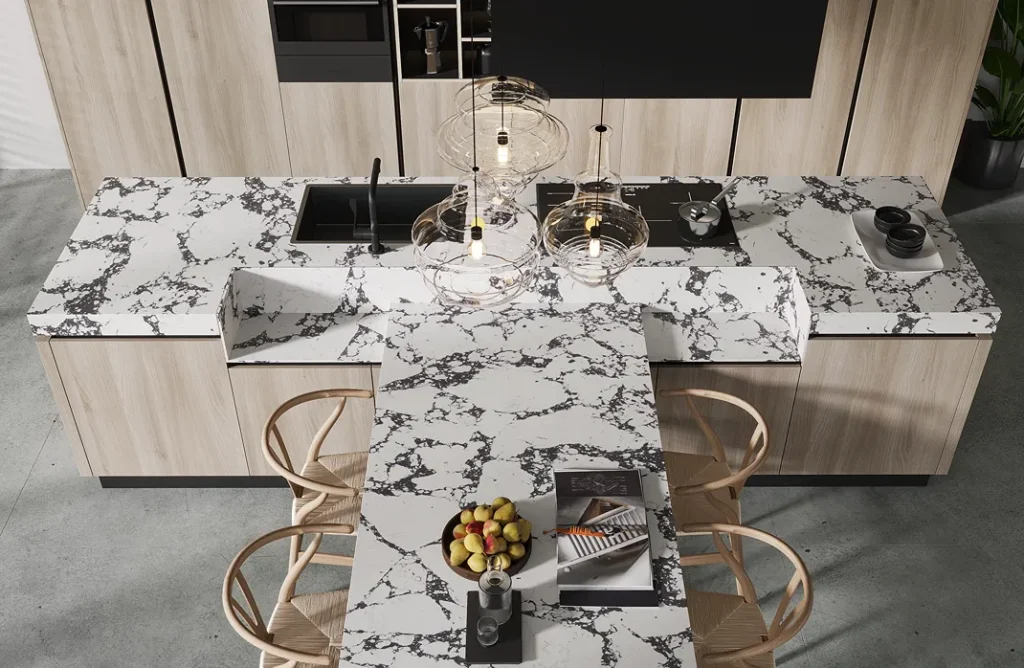
Natural stone and quartz have key differences in their origins and makeup. Granite countertops come straight from the earth as 100% natural stone. Quartz countertops are engineered products. This creates several advantages for Chinese quartz stone.
Quartz needs almost no upkeep compared to natural stone. You’ll never need to seal quartz surfaces because their resin works as a built-in sealer, while natural stone needs regular sealing to prevent stains. This makes quartz resistant to stains, even from acidic foods like lemon juice or tomato sauce that would damage marble.
Quartz countertops are also much tougher than natural stone. They’re nearly impossible to break and harder than granite, which means fewer chips or cracks. This makes Chinese quartz perfect for kitchens that see heavy use every day.
Consistency sets quartz apart too. Natural stone slabs show random, unique patterns. Chinese quartz slabs come with exact, matching colors and patterns. This makes them ideal when you need multiple pieces that look the same.
Common styles and finishes available

Chinese quartz brands offer styles that look like natural stone plus unique designs nature can’t create. Modern production methods let makers create subtle, natural patterns or bold, striking designs.
You can choose from three main quartz countertop finishes:
- Polished finish – Most people choose this glossy, reflective finish. It brings out colors and veining while fighting stains and making cleanup easy
- Honed finish – This matte option gives a soft, natural look without much reflection. It helps hide fingerprints and smudges
- Leathered finish – You get a slightly textured surface with gentle ripples that show off the stone’s features while resisting fingerprints better than other finishes
Chinese quartz slabs come in colors from bright white to cool gray, warm cream to deep black. Some options sparkle with mirror flecks, while others show veining that looks just like marble or other natural stones.
These design options make Chinese quartz work well in any kitchen or bathroom, whether you prefer modern minimalist or traditional styles.
Why Source Quartz from China
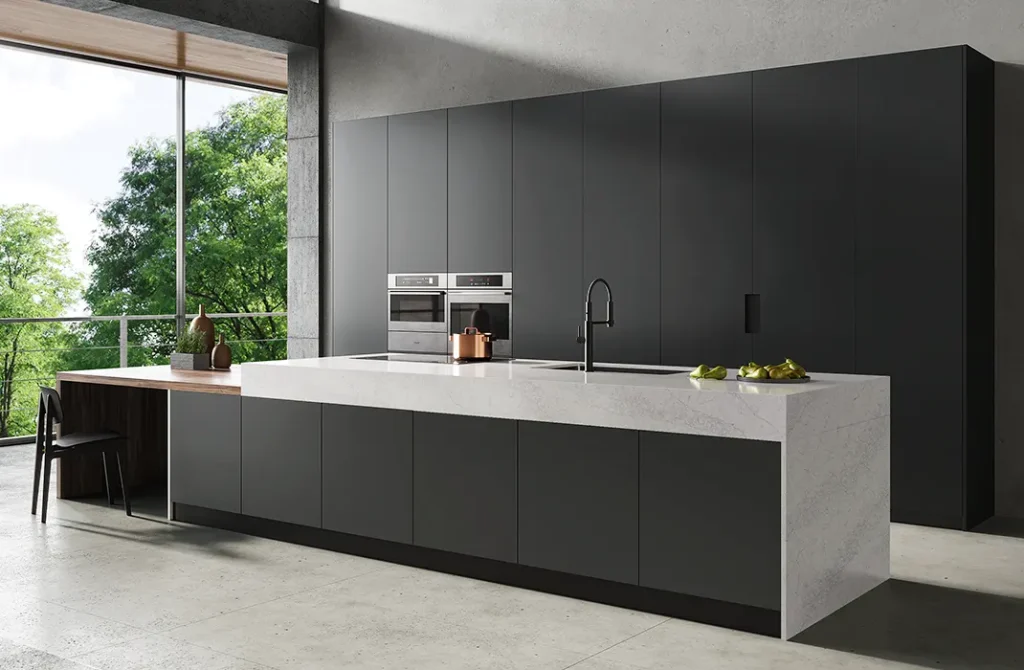
China leads the international stone market as the primary source for engineered quartz surfaces. This manufacturing powerhouse gives importers, contractors, and homeowners compelling advantages that are 30 years old.
Cost advantages of Chinese quartz countertops
The price gap between Chinese and American or European quartz is eye-opening. Chinese quartz costs half as much as premium brands. You’ll pay around $105 per square foot for premium brands, while Chinese options range from $35-50 per square foot installed.
Several economic factors create this huge price difference:
- Lower labor costs: Chinese quartz production runs with labor costs seven times lower than American counterparts.
- Tax incentives: The Chinese government backs quartz exports with friendly policies. Exporters get a 13% tax refund on exported quartz slabs. Since the original tax is only 7.5%, they earn an extra 5.5% just from exporting.
- Complete supply chain: Chinese producers control everything from raw materials to machinery and final production. This gives them an edge over manufacturers in other countries who need to import components, which cuts costs at every step.
In spite of that, tariffs have changed the pricing in some markets. American buyers face duties between 242% and 341% on Chinese quartz since 2018, which affects both availability and cost.
Design variety and customization options
Chinese manufacturers excel at offering diverse design choices. Their massive production capabilities mean customers can choose from countless colors, patterns, and finishes.
These customization options go beyond simple color choices:
- Edge profiles from straight and beveled to bullnose, ogee, and waterfall styles
- Surface finishes like polished (reflective), honed (matte), and leathered (textured)
- Decorative accents including inlays, inserts, and mosaics
Chinese manufacturers let you create unique designs for specific projects. You’ll find everything from classic white quartz to dramatic veined patterns that look just like marble.
Quality improvements and certifications
“Made in China” doesn’t mean lower quality in today’s quartz industry. Chinese manufacturers have poured money into high-end technology and quality control.
Today’s Chinese quartz facilities use advanced equipment, often brought in from Italy and other tech-savvy countries, to maintain consistent production standards. Raw materials go through strict quality checks before production starts.
Top Chinese manufacturers hold important certifications:
- ISO certifications that show they follow strict quality control
- Greenguard certification proving low chemical emissions
- NSF certification confirming food safety standards
Products undergo extensive testing for functionality, durability, and resistance to stains, scratches, and damage. So quality-focused Chinese manufacturers now make engineered quartz that matches or beats products from anywhere else globally.
How to Find Reliable Chinese Suppliers

Finding reliable manufacturers is the key first step to source quartz countertops from China. The market has many options, and knowing how to spot dependable suppliers can mean the difference between a great import experience and one that can get pricey.
Using platforms like Alibaba and Global Sources
Online B2B marketplaces are the foundations of connecting with Chinese quartz manufacturers. Alibaba leads as the most complete platform that hosts many verified quartz countertop suppliers with detailed company profiles and product listings. Here’s what to do when searching these platforms:
- Use specific search terms like “manufactured quartz countertops” or “engineered quartz slabs” to narrow results
- Filter for Gold Suppliers or verified manufacturers with export experience
- Look for suppliers who ship mostly to North America (many send 20-70% of their exports to this region)
Start by exploring supplier profiles carefully. Companies with annual revenues between $1-5 million usually show solid production capabilities without being too big to ignore smaller orders.
Global Sources gives you another option with tighter verification processes. These two platforms show most major Chinese quartz manufacturers, but each might feature different suppliers.
Evaluating supplier certifications and reviews
Quality checks come next. A supplier’s certifications tell you a lot about their reliability and product quality. Keep an eye out for:
- ISO 9001 certification (quality management systems)
- CE certification (European safety standards)
- NSF certification (food-safe materials)
Good suppliers have solid reviews and strong trading history. Companies that ship internationally tend to be more reliable. Reach out to several suppliers at once and compare how they respond – it shows you their level of professionalism.
Trusted suppliers are happy to share their certification papers. Ask for these documents directly and check if they’re real through the issuing organization.
Requesting samples and verifying product specs
Smart buyers never place big orders without checking product samples first. Most good Chinese quartz manufacturers offer samples, but you might need to pay for shipping. When you ask for samples:
- List exact dimensions, colors, and finishes
- Give technical documentation and drawings to show what you need
- Tell them how you’ll use the product and any special needs
Samples usually cost $55-60 per square meter with FOB shipping from ports like Xiamen. This might seem like extra cost upfront, but it’s tiny compared to getting stuck with poor quality materials in bulk.
Once you get your samples, test them well. Look at color matching, even thickness, and edge quality. Try testing stain resistance with common household items. For bigger projects, getting third-party inspectors can give you the full picture.
These steps boost your chances of finding Chinese quartz suppliers who deliver great products that match what you need.
Ensuring Quality and Compliance
Quality Chinese quartz needs proper verification after you find potential suppliers. The right inspection procedures and certifications will determine if your products meet international standards.
Factory audits and third-party inspections

Factory visits are a great way to get insights into production facilities and quality control measures. Travel to China isn’t always possible, so hiring third-party inspection agencies becomes a reliable option. Companies like SGS provide professional inspection services that cost $120-$300 per day. These inspections ensure manufacturers follow quality standards from raw material selection to final fabrication.
The inspection process has these steps:
- Raw material assessment
- Manufacturing process evaluation
- Final product quality verification
- Packaging and loading supervision
You’ll get a detailed inspection report showing compliance with specifications. Quality-focused suppliers regularly audit their Chinese factories to maintain quality procedures.
Understanding silica content and safety standards
Silica content is crucial for quartz countertop safety. Chinese quartz slabs contain up to 93% crystalline silica – this is a big deal as it means that natural granite only has 45%. Such high silica levels create health risks during fabrication and installation.
Workers who breathe silica dust risk silicosis—an incurable lung condition—plus lung cancer, COPD, and kidney disease. These risks affect workers who cut and fabricate the material, and importers must follow safety regulations.
OSHA has set a Permissible Exposure Limit (PEL) of 50 μg/m3 for respirable crystalline silica over an 8-hour average. Chinese quartz manufacturers now take these concerns seriously. Companies like Cosentino have developed low-silica alternatives through HybriQ technology.
Certifications to look for (ISO, CE, NSF)
Quality Chinese quartz brands need these key certifications:
- NSF/ANSI 51: Shows food safety compliance and confirms surfaces are safe for direct food contact and resist bacterial growth
- Greenguard Gold: Shows low chemical emissions for better indoor air quality
- ISO 9001: Proves compliance with international quality management standards
- ISO 14001: Confirms environmental management systems
- CE: Shows compliance with European safety standards
Leading Chinese manufacturers follow strict quality control standards while keeping costs low. Products with these certifications go through extensive testing for durability, dimensional accuracy, color consistency, and surface finish.
Note that certifications aren’t just marketing tools. They prove that manufacturers follow internationally recognized quality and safety protocols, making them crucial when choosing Chinese quartz suppliers.
Shipping and Logistics Considerations

Your success in importing Chinese quartz depends on how well you manage logistics after finding a good supplier. The right shipping process will ensure your slabs arrive in perfect condition and on time.
Choosing a freight forwarder
Finding an experienced freight forwarder who knows heavy stone materials is vital when shipping Chinese quartz countertops. Expert forwarders help you direct international shipping challenges and give you valuable guidance throughout the process. A specialized logistics partner can help you:
- Handle documentation requirements specific to stone products
- Track shipment progress
- Get door-to-door delivery options that make the whole process easier
Some suppliers can arrange shipping through their own forwarder networks, which might make coordination easier.
Packaging and container loading tips
Chinese quartz slabs ship in two main packaging formats to avoid damage:
- A-frame packing – Perfect for full slabs
- Wooden bundles/crates – Best for customized quartz products like prefabricated countertops
A 20-foot container is the top choice for quartz exports. Each standard 20-foot container fits:
- 2cm thickness: 8-9 bundles (about 90-104 slabs)
- 3cm thickness: 8-9 bundles (about 62-70 slabs)
Weight limits often restrict capacity more than available space. U.S. road weight limits (44,000 lbs) cut capacity to 6-7 bundles no matter the thickness.
Customs documentation and clearance
Get these important documents ready before shipment arrival to speed up customs:
- Bill of Lading
- Commercial Invoice
- Packing List
- Certificate of Origin
Suppliers who understand documentation requirements make the import process much easier. FOB (Free On Board) pricing is the standard arrangement, which means you pay shipping costs from Chinese ports. After customs clearance, you’ll need to cover sea freight, destination port fees, and applicable taxes to get your goods.
Port delivery allows the highest weight (59,525 lbs), while rail ramp delivery (47,400 lbs) and standard road delivery (44,000 lbs) have stricter limits.
Conclusion

Chinese quartz countertops give contractors, builders, and homeowners a great way to get high-quality materials at competitive prices. The advantages of Chinese quartz are clear – you’ll save money while getting durable and versatile designs. It’s no surprise that Chinese manufacturers now control over 93% of the US countertop market.
Success in sourcing requires careful planning and attention to detail. You should start by checking supplier credentials on platforms like Alibaba. Next, ask for samples and verify certifications to protect your investment. Working with experienced freight forwarders will help you handle international shipping smoothly.
Chinese manufacturing quality has improved dramatically. Manufacturers now follow strict standards and have earned international certifications. Chinese quartz quality matches or surpasses alternatives that cost twice as much. The mix of 90-95% natural quartz with polymer resins creates tough surfaces that need almost no maintenance – a huge selling point for installations.
Tariffs and shipping from overseas can be challenging. Yet the cost benefits make Chinese quartz attractive for many projects. Chinese manufacturers can offer premium quartz at unbeatable prices thanks to their supply chain control, government support, and lower labor costs.
Chinese quartz countertops show how global sourcing delivers great value without cutting corners on quality. This piece gives you the knowledge to handle the sourcing process with confidence. You’ll get an amazing mix of quality, custom options, and affordability that only Chinese quartz countertops can deliver.
FAQs
Q1. Is Chinese quartz countertop quality comparable to other sources? Chinese quartz countertops have significantly improved in quality over the years. Many Chinese manufacturers now produce quartz that matches or exceeds the quality of more expensive alternatives, adhering to strict quality control standards and obtaining international certifications.
Q2. What are some reputable Chinese quartz brands to consider? While specific brand recommendations can vary, some well-known Chinese quartz manufacturers include OPPEIN Stone, UMGG Stone, Sinostone, Vemy Quartz Surface, and KKQ Quartz. These companies are recognized for their quality products and innovation in the quartz industry.
Q3. How can I verify the quality of quartz countertops? To assess quartz quality, check for color consistency across the slab, examine the uniformity of patterns, and test for stain and scratch resistance. Additionally, look for certifications like NSF, ISO, and Greenguard, which indicate adherence to international quality and safety standards.
Q4. What are the cost advantages of sourcing quartz from China? Chinese quartz countertops typically cost 50-60% less than premium brand alternatives due to lower labor costs, government export incentives, and control over the entire production chain. This significant price difference makes Chinese quartz an attractive option for many projects.
Q5. What should I consider when shipping quartz countertops from China? When importing quartz from China, consider working with an experienced freight forwarder familiar with heavy stone materials. Pay attention to proper packaging (A-frame or wooden crates), container loading limits, and necessary customs documentation to ensure smooth shipping and delivery of your quartz countertops.


